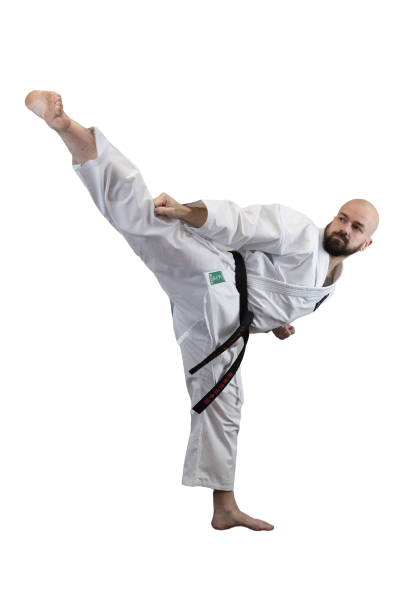
You can ask SKMA about returning to karate or traditional martial arts even if your last class was years ago or your earlier training came from another school. SKMA’s current Adult Martial Arts programme is for adults and teens aged 13+ and lists Goju Ryu Karate, Shorin Ryu Karate and Kobujutsu.
What the public page does not explain is just as important for a returner: whether an old grade is recognised, how a different style is handled, whether old kit should be worn, or which session suits someone whose knowledge and fitness have changed. Explain your previous experience, ask for the current arrangements and use the free week as a fresh assessment. Do not assume that you must either start from zero or resume exactly where you stopped.
Begin with a short, factual training history
You do not need to reconstruct every grading date. Give SKMA enough information to understand the question:
- the martial art or style you trained in, if you know it;
- the club or association, if that is relevant;
- roughly when and for how long you trained;
- the last grade you were awarded, without assuming it transfers;
- how long you have been away; and
- whether an injury, health concern or current movement limit affects the visit.
That description is more useful than saying only that you are a beginner or an experienced student. A long break can leave some movements familiar while the class terminology, syllabus, fitness demands or your own body feel different.
SKMA’s public pages do not publish a returner category or a grade-transfer policy. A direct reply is therefore the reliable source for what happens next.
Ask how your old grade will be treated
A belt shows what another instructor or organisation awarded at a particular time. It does not, by itself, tell a new academy how your former syllabus compares with its current teaching.
Ask SKMA whether it wants to see any record, whether the coach will simply observe your first visits, and what you should wear. The academy may have a process, but it is not published on the current site. This article does not claim that you will keep a grade, repeat a grade, wear a white belt or be assessed in a particular way.
That uncertainty is not a reason to delay the enquiry. It is a reason to avoid deciding the answer yourself before the coach has explained the current approach.
Check the style and session, not just the word “karate”
SKMA lists three options inside Adult Martial Arts:
| Current published option | Useful returner question |
|---|---|
| SKMA Goju Ryu Karate | How does the current beginner or returner session introduce this route? |
| SKMA Shorin Ryu Karate | Which previous experience is relevant, and what should I expect to learn afresh? |
| SKMA Kobujutsu (Weapons) | Is this part of the offered session, and is any equipment supplied? |
If your previous style had the same name, do not assume the syllabus, terminology or grading arrangement is identical. If it had a different name, do not assume none of your experience is useful. Ask what the current session contains and let SKMA explain how it would place you.
The guide to Karate or Kobujutsu for Adult Beginners owns the broader choice between the listed arts. This returner guide has a narrower job: handling previous training without guessing how it transfers.
Treat old kit as a question, not proof
An old uniform may no longer fit, may belong to another organisation or may not suit the session you are offered. An old belt may carry personal meaning without establishing where you should stand in a new class. Training weapons or protective equipment should not be brought unless SKMA confirms they are appropriate.
Before the visit, ask:
- What should I wear for the first session?
- Should I bring my old uniform or belt?
- Is any record of my previous grade useful?
- Does the session use equipment, and what is provided?
SKMA’s public pages do not answer these points. Do not buy new kit or follow another club’s etiquette until the academy replies.
Return from your current fitness, not your remembered fitness
Previous training can make some movements or instructions feel familiar, but it does not guarantee that your current mobility, timing or stamina matches your last period of practice.
The NHS physical activity guidance for adults says activity and intensity should be appropriate for your fitness. It also advises speaking to your GP first if you have not exercised for some time or have medical conditions or concerns. NHS Better Health similarly recommends starting small and building activity into a realistic routine.
That is general guidance, not a description of SKMA’s session. Tell the academy what has changed since you last trained and ask how the specific class is paced. Do not use an old grade as a reason to ignore a current health concern or to match the effort you remember immediately.
Five questions for the first reply
Use the enquiry to get current answers:
- Which Adult Martial Arts session suits a returner with my background? Ask for the art, date, arrival time and class length.
- How will my previous style and grade be handled? Ask without assuming recognition or a restart.
- What will I practise during the first visit? Check whether the session is karate, Kobujutsu or a combination and whether it includes individual, partner or contact work.
- What should I wear or bring? Confirm the old uniform, belt and equipment position before travelling.
- How should I approach the current pace? Explain a relevant break from exercise, injury or concern and ask what applies to the offered session.
The existing article Can Beginners Start Adult Karate in Totton? answers the no-experience eligibility question. A returner has a different decision: how to present earlier experience without expecting the new class to reproduce an old one.
Use the free week to establish a new baseline
SKMA’s guide to what happens during a free week explains the published enquiry route. For a returner, the most useful result is a current baseline rather than proof that everything has been remembered.
After a visit, ask yourself:
- Did SKMA explain how it will handle my previous experience?
- Did I understand which art and session I attended?
- Were the uniform, grade and equipment expectations clear?
- Could I follow the current pace without trying to recreate my old performance?
- Would I like to learn this academy’s current material from the position offered?
Those questions keep the decision with the real class. They do not promise that previous skills will return at a particular speed or that an old grade will be retained.
SKMA lists its academy at Totton Activity Centre, Unit 5, Brokenford Lane, Totton, Southampton, Hampshire, SO40 9DY. Review the Totton location page and current academy FAQs, then confirm the session before travelling.
When you are ready, book your free week and select Adult Martial Arts. Add a short note about what you trained in, how long you have been away and the grade, kit or session question you want SKMA to answer.