
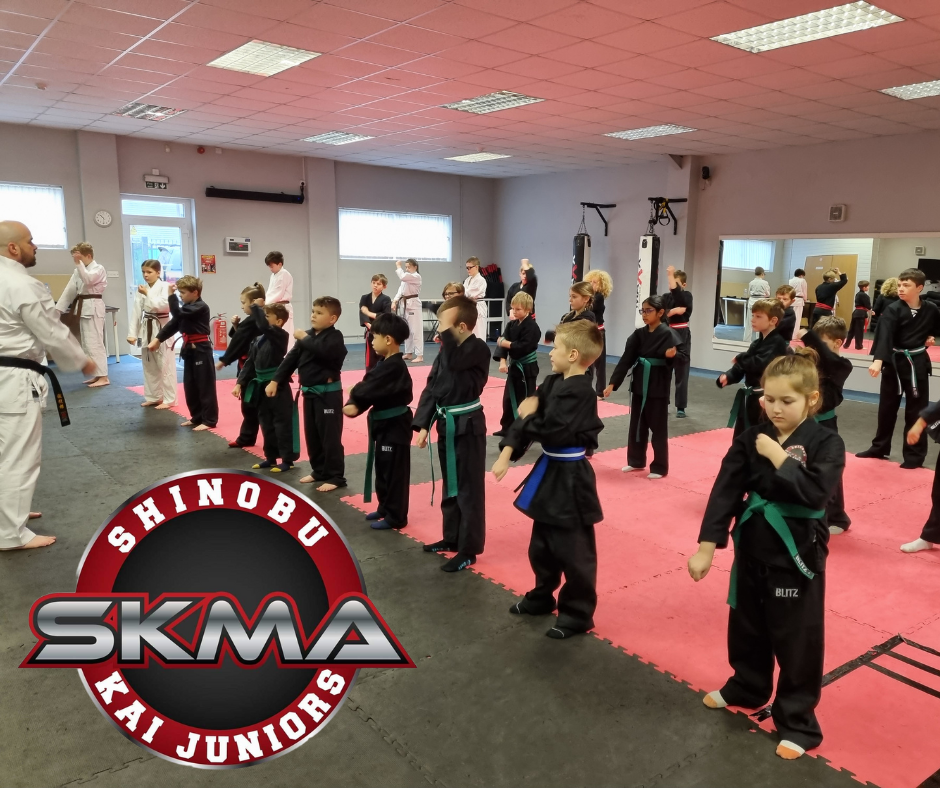
SKMA currently presents Junior Martial Arts for children aged 7–12 as a route into practical self-defence. That tells parents the programme focus, but it does not explain the beginner syllabus, which situations or techniques are covered, whether children work with partners, or what level of contact appears in a class.
If self-defence is your main reason for looking, ask about the actual teaching rather than relying on the phrase alone. A useful answer should help you understand what your child will practise, how the activity is introduced and how your child can speak up if something feels unclear or uncomfortable. No class can guarantee that a child will avoid harm or know what to do in every confrontation.
Start with what SKMA currently confirms
SKMA’s current Junior Martial Arts page confirms four relevant facts:
- the programme is for children aged 7–12;
- it is SKMA’s traditional martial arts route in Totton;
- practical self-defence is one of its published areas of focus; and
- complete beginners can use the free week to experience the coaching, pace and environment.
The page does not publish a list of self-defence techniques, scenario exercises, partner arrangements, contact rules, progression stages or equipment. Those are current-class questions for SKMA, not details to borrow from another martial arts school.
If your child is new to the age group as well as the activity, the guide Can a 10-Year-Old Start Martial Arts as a Beginner in Totton? answers the separate eligibility question. This guide is narrower: it helps a parent evaluate the published self-defence focus.
Ask what “practical self-defence” means in this class
Ask SKMA for a plain-language example of what a new child will do. The answer may involve individual practice, coached movement, partner drills, discussion or another format, but the public page does not currently say which.
Five questions make the phrase more concrete:
- What does a complete beginner practise first? Ask for an example from the current 7–12 session rather than a general description of the whole programme.
- Which parts are individual and which involve a partner? This helps your child picture the class and avoids treating all self-defence training as either solo practice or sparring.
- Is physical contact used? Ask who makes contact, why it is used, how it is explained and what a child can do if they do not understand or feel comfortable.
- How are children grouped for an activity? Age, experience, size and the purpose of the exercise may all be relevant questions, but SKMA does not publish its current grouping process.
- How does the teaching progress after the first week? Ask how practice develops over time without assuming a belt order, assessment, competition or guaranteed outcome.
These questions evaluate the class description. They do not suggest that SKMA currently uses any particular drill, contact level or progression system.
Separate class contact from a promise of safety
Physical contact can mean different things: a coach adjusting a position, children practising a controlled movement with a partner, or contact that is part of a sport exercise. The programme name does not tell you which applies.
The NSPCC Child Protection in Sport Unit’s guidance on physical contact says contact in sport should have a clear reason, children should be asked and listened to, and organisations should have sport-specific guidance. It also says concerns about contact should be handled through safeguarding and disciplinary procedures.
That is general safeguarding guidance, not proof of SKMA’s arrangements. Ask SKMA where its current guidance can be reviewed, who a parent or child can speak to and how contact is handled in the offered session. The NSPCC’s separate five-question checklist for parents also recommends asking about staff checks, the safeguarding policy, accidents, the person to contact and staff training. This article does not claim answers that SKMA has not published.
Keep your child involved in the decision
A parent can check policies and class details, but the child’s experience still matters. Sport England’s current guidance for parents and carers recommends talking to children, listening to why they take part and asking how they want to be supported.
Before the visit, explain only what SKMA has confirmed. Avoid promising that the class will make your child safe in every situation, stop bullying or give them confidence. After a class, ask specific questions:
- What did you practise on your own and with someone else?
- Did you know why an exercise was being done?
- Was any contact explained before it happened?
- Did you know how to ask a question or take a pause?
- Would you like to try the class again?
These answers help you compare the published self-defence focus with the real experience. They do not require your child to judge their performance after one unfamiliar session.
Use the free week to gather current evidence
SKMA’s free-week guide says families choose a programme, send a contact route and receive suitable session options. Select Junior Martial Arts and include your self-defence questions in the enquiry.
During the week, notice whether the activity is explained in language your child understands, whether instructions and boundaries are clear, and whether your child knows who to ask for help. Also confirm the current clothing, equipment, parent-observation, session and post-trial details directly; SKMA does not publish them all.
SKMA lists its academy at Totton Activity Centre, Unit 5, Brokenford Lane, Totton, Southampton, Hampshire, SO40 9DY. Review the Totton location page and current academy FAQs before travelling.
If the published Junior Martial Arts route matches what your family wants to explore, book a free week and ask SKMA to explain what practical self-defence will mean in the session offered to your child.