
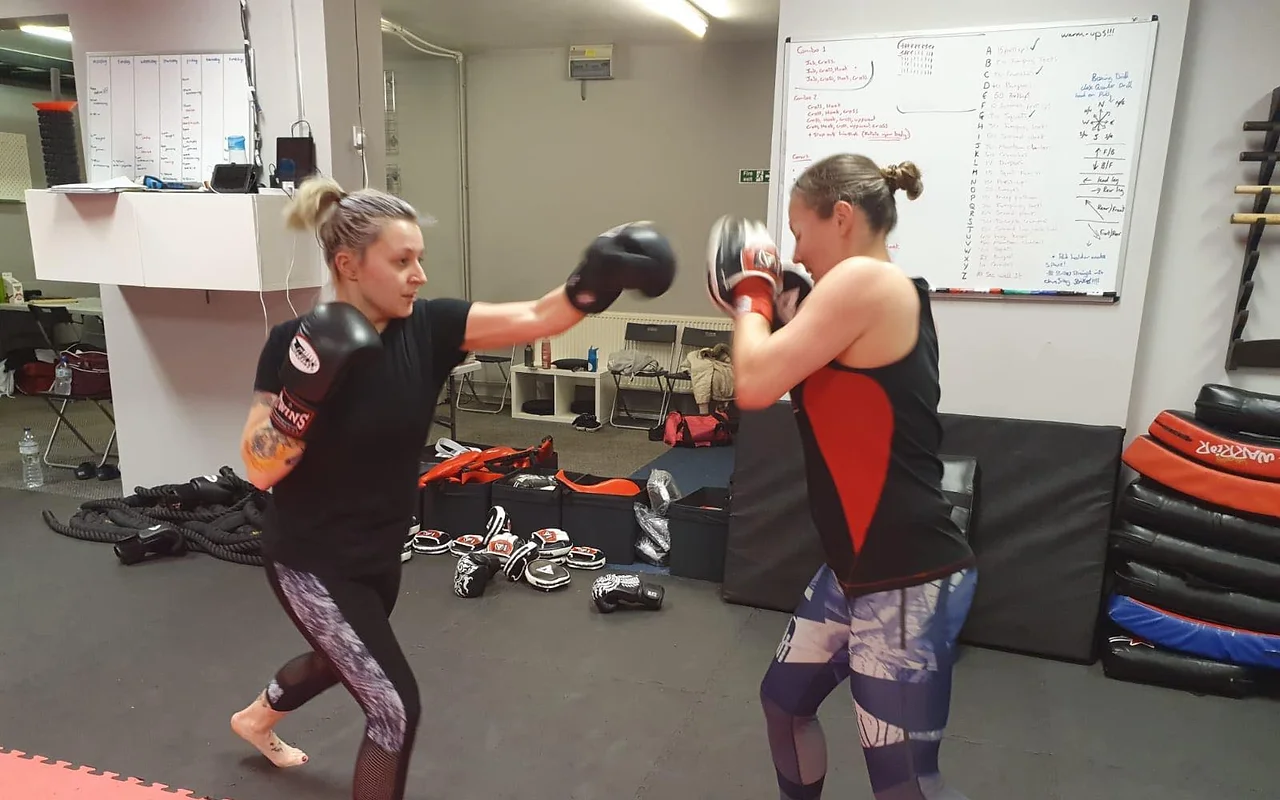
For a beginner in Totton, the useful difference is not “serious exercise” versus “easy exercise”. It is the experience you want to repeat. SKMA’s Adult Kickboxing programme is a coached route focused on punches, kicks, knees and footwork. A general gym can offer a broader choice of equipment, workouts and, in some facilities, instructor-led classes.
Choose kickboxing first if learning a striking skill is part of the appeal. Choose a gym first if you mainly want to select your own exercise format from a wider facility. Neither choice guarantees better fitness, motivation or results, and neither label tells you every practical detail. Compare the actual options available now.
Start with what you want to do during the session
Picture the activity rather than the outcome. Would you rather follow coaching, practise a defined movement, repeat it and gradually learn a skill? Or would you rather choose from machines, weights, cardio equipment or different fitness classes?
SKMA’s current page describes Adult Kickboxing as high-energy coaching in punches, kicks, knees and footwork for all skill levels. That is more specific than “get fit”, but it is not a published class plan. The page does not say how much time is spent on each activity, whether everyone follows the same sequence or how a complete beginner is introduced.
The current official page for Totton Health & Leisure lists both a gym and fitness classes. Its fitness-classes page also shows that a leisure-centre choice need not mean exercising alone. Those are examples of local formats, not recommendations or evidence about SKMA.
Compare the format, not a stereotype
| Question | Kickboxing class | General gym visit |
|---|---|---|
| What are you going there to practise? | At SKMA, the published focus is punches, kicks, knees and footwork. | The activity depends on the facility and the workout or class you choose. |
| Who sets the session? | A coached class normally has a shared session, but SKMA does not publish its exact structure. | A gym may allow a self-selected workout and may also offer inductions, programmes or group classes. |
| What should you confirm? | Current session, beginner introduction, pace, partner work, contact and equipment. | Current access, induction, equipment, class booking and the support available for your chosen activity. |
| How can you judge it? | Try the real class and notice whether you want to learn the skills. | Try the real facility or class and notice whether you can use the options consistently. |
This comparison avoids two common shortcuts. A gym is not necessarily solitary or uncoached. A kickboxing class is not automatically competitive or full-contact. Only the current provider can explain the specific session.
Decide how much choice or structure helps you
Some beginners prefer arriving with a session already led. Others prefer choosing the exercise, order and pace themselves. Neither preference is a character test.
The NHS Better Health guide to becoming more active recommends starting small, finding something enjoyable and planning when activity can realistically fit. Sport England’s current getting-started guidance also recommends trying activities until you find one you enjoy. That supports testing the experience rather than predicting which label will keep you motivated.
Ask yourself:
- Do I want to learn a named skill, or mainly complete a workout?
- Would a led session remove decision-making, or would I prefer more control?
- Am I interested in practising the same skills over time?
- Which current option can I attend without repeatedly rearranging my week?
- What details would make the first visit feel clear rather than intimidating?
Ask what the kickboxing class includes
SKMA’s public information confirms the programme focus and beginner-friendly positioning. It does not publish the timetable, class length, class plan, equipment, partner-work format, contact level, sparring, coach-to-student ratio, price or commitment terms.
Before travelling, ask:
- Which current Adult Kickboxing session is suitable for a complete beginner?
- What will a newcomer do during that session?
- How are partner work, pad work, contact and sparring used, if at all?
- What clothing or equipment is needed or provided for the first visit?
- What should you ask about costs and commitment after the free week?
If your worry is that you must become fit before making an enquiry, read Do I Need to Get Fit First?. If you are comparing kickboxing with SKMA’s traditional route rather than a gym, use the guide to Adult Martial Arts or Kickboxing. Those are separate decisions.
Run a fair first-week comparison
Do not compare your first kickboxing class with an imagined perfect gym routine. Compare real experiences. After each visit, note:
- Did you understand what to do and who to ask for help?
- Did the activity itself hold your attention?
- Was the pace clear enough to follow from your starting point?
- Did the practical arrangements work for your week?
- Would you choose to return for the activity, not only the hoped-for outcome?
SKMA’s published free-week process gives you a way to experience the adult class before considering a longer commitment. It does not publish what happens after that week, so ask for current costs, equipment and terms when you have enough information to decide.
Plan the Totton visit
SKMA lists its academy at Totton Activity Centre, Unit 5, Brokenford Lane, Totton, Southampton, Hampshire, SO40 9DY. Review the Totton location page and current SKMA FAQs, then confirm the offered session before travelling.
If coached striking practice is the experience you want to test, book your free week and choose Adult Kickboxing. Say that you are a complete beginner and include the class-format question that matters most to you.